

URGENT! Alberta has proposed creating a caribou zoo and killing wolves for the next 50 years!
Click to learn more.
WOLVES & CARIBOU

Both provinces of Alberta and BC have been killing wolves for at least a decade under the guise of caribou recovery. This is not the solution. Caribou are in decline across the world. Like a canary in a coalmine, humans have been watching the health of animals to gauge the health of the surrounding environment for a very long time.
Photo Craig Pettitt - Valhalla Wilderness Society

Until recent decades, researchers thought there were 24 subspecies of grey wolves in North America, based on taxonomy. Many studies cast doubt on this large number and eventually researchers decided that there were more similarities than differences among many so-called subspecies, with territories overlapping and inter-breeding common, so several sub-species were clumped together.
More recent revisions based on genetic analysis have revealed that both grey wolves and red wolves exist in North America. An alternative classification system by John Theberge in 1991 categorized wolves based on "ecotypes"; using major prey types and vegetation zones to classify subspecies. In a similar way, wolves are often considered to have evolved their own "cultures".
WOLVES & LIVESTOCK
Along with natural prey such as elk, deer, and moose, wolves have also been known to kill cattle, sheep, and other livestock. Many people first point to the wolf when livestock losses occur. Let’s face it…blaming something makes us feel better, but this is more often another example of the wolf being targeted as a scapegoat and people not focusing on the right quandary. This will not solve any issues for wolves, livestock, or ranchers.
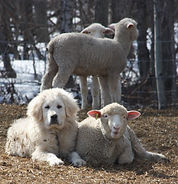
Photo Louise Liebenberg

ECOLOGICAL ROLE
Click image to play video
"HOW WOLVES SHAPE RIVERS".
Photo Peter A. Dettling
Biologists researching wolves have recognized Canis lupus as a keystone species, capable of causing a trophic cascade when populations dip below a critical threshold.
Wolves and other large carnivores exert many direct and indirect effects on ecosystems.
For example, wolf direct effects have been documented for elk and coyotes, while indirect effects have been documented for a variety of other species and services, including but not limited to small mammals, scavengers, songbirds, insects, vegetation growth, stream morphology, disease control, carbon sequestration, and mesopredator control (33, 34, 36, 40, 41).

ARE WOLVES PROTECTED?
Click on image to read
"THE PRACTICES OF WOLF PERSECUTION,
PROTECTION, AND RESTORATION IN
CANADA AND THE UNITED STATES"
Authors: Marco Musiani and Paul Paquet"
Photo Peter A. Dettling
Although the gray wolf is one of the world's most widely distributed animals, approximately one third of its range has been reduced by human persecution and/or habitat fragmentation, and it has been extirpated from much of Western Europe, the United States, and Mexico (36). Habitat loss, persecution, depletion of prey and human intolerance are threatening large carnivores around the globe, with three quarters of the world's largest carnivores now in decline (36). At the same time, we are only just beginning to understand the dynamic and important ecological influences and economic benefits large carnivores such as wolves contribute to the planet.
Wolf researcher John Theberge has estimated that less than 3% of Canada is adequately protected for wolf packs to allow wolves to thrive in their natural state.
WOLF BASICS: "Through education, dispelling the myths"
to view, download, or print a copy of our WOLVES: FAST FACTS pamphlet . Please share it too!
WOLF BIOLOGY
The grey wolf, Canis lupus, is a member of the dog family - Canidae, which is part of the order Carnivora.
Grey wolves were once and still are considered a widely distributed species. Previously, they occupied the holartic range. As expected, considerable variation occurs accross the vast range of grey wolves, where populations have evolved and adapted to their unique habitats and inter-species relationships.
